Organic Lead Generation: The Strategy That Keeps Working After You Stop | Blackgrids
Let us start with the honest answer to the question nobody wants to hear. Organic lead generation does not guarantee leads the way paid ads do. You cannot switch it on and watch form fills come in by Tuesday.
If that is what you are looking for, run an ad. Paid ads are fast, measurable, and predictable. They work immediately and stop the moment the budget does.
Organic lead generation works differently. It is slower to start and impossible to stop once it is running. And that distinction is the entire reason it matters.
The businesses winning on organic in 2026 are not the ones who got lucky. They are the ones who started eighteen months ago and stayed consistent. The ones who start today will be those businesses in eighteen months. And the ones who wait will still be entirely dependent on ad spend while their competitors compound.
What Organic Lead Generation Actually Is
Organic lead generation is the process of attracting potential customers through unpaid channels. No cost per click. No cost per impression. No budget that needs renewing every month.
The three primary channels are SEO, social media management, and email marketing. Each one builds a different kind of asset:
SEO builds search visibility. When someone Googles a problem you solve, your content appears. They click. They read. They trust. They enquire.
Social media management builds an audience. People who follow you for your content become warm prospects before they ever fill a form.
Email marketing builds a list you own. No algorithm can take it away. No platform change can make it disappear overnight.
None of these produce leads the way a Meta ad does on day one. All of them produce leads that convert better, cost less, and keep coming in long after the work is done.
The Timeline Nobody Tells You About
Most businesses abandon organic lead generation before it starts working. Not because it failed. Because they expected it to behave like paid advertising.
Here is what the 2026 data actually says about timelines:
3 to 6 months
for new SEO content to begin ranking and driving consistent traffic
Source: HubSpot: Organic Marketing Secrets 2026
9 to 12 months
for SEO to overtake paid ads in ROI — after that, organic compounds indefinitely
Source: Click Vision / theStacc: SEO ROI Statistics 2026
3 to 6 months
for social media to build meaningful momentum with consistent content
Source: HubSpot: Organic Marketing Secrets 2026
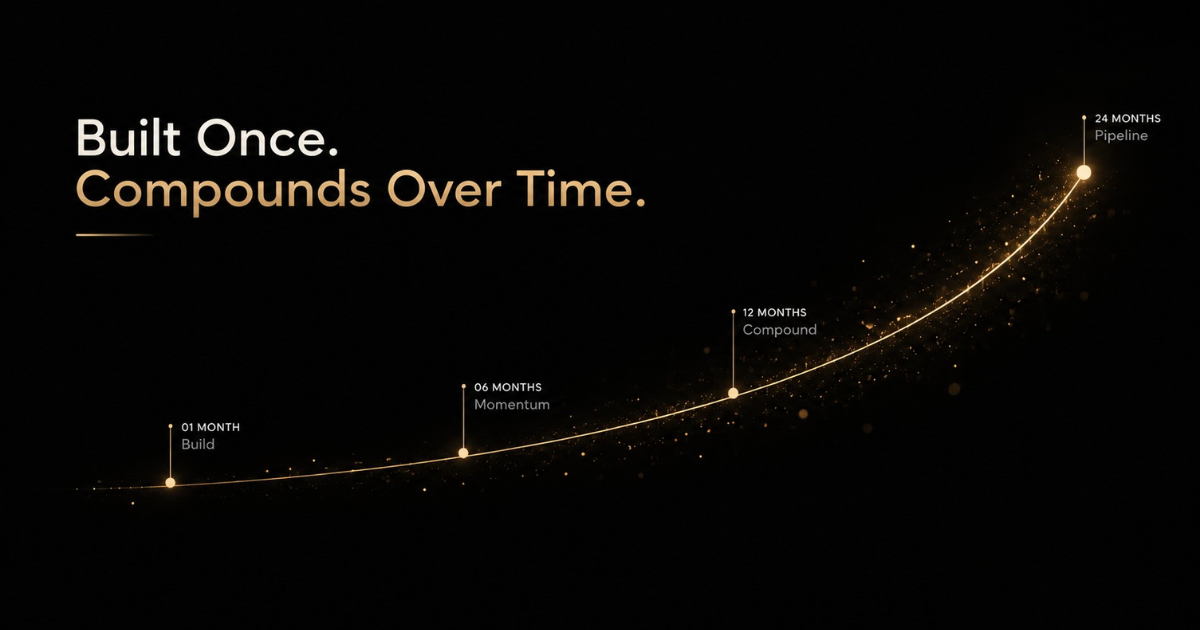
The pattern is consistent across every source. Organic is slow for six to twelve months. After that, the curve bends. The content that ranked six months ago keeps pulling traffic. The audience built over twelve months keeps growing. The email list cultivated over a year keeps converting.
Paid advertising has a ceiling. Organic compounds.
SEO surpasses PPC ROI within 9 to 12 months and continues growing. PPC ROI stays flat or declines as competition raises bid prices. SEO ROI increases as authority and content compound. — SeoProfy 2026
What the Numbers Say When It Is Working
The reason organic is worth the patience is not philosophy. It is math. Here is what SEO and social media management actually produce for businesses that stay consistent:
And the statistic that matters most for a new domain: SEO drives 1000% more traffic than organic social media alone. Not a typo. Ten times more. Which is why SEO is always the first organic investment worth making.
The Two Things That Determine Whether Organic Works
Businesses that fail at organic lead generation almost always fail for one of two reasons. Not because organic does not work. Because they got one of these wrong.
1. The Right Strategy
Creating content nobody searches for is not a strategy. It is a diary. Publishing on social media without understanding what your audience needs to see at each stage of their buying journey is noise.
The right strategy for organic lead generation starts with one question: what is my ideal client searching for, saying, and struggling with — and what content do I need to create to be the answer to all three?
For SEO that means keyword research, buyer intent mapping, and content that answers real questions with enough depth to earn a ranking. For social media management that means content pillars, a posting cadence, and formats that match both the platform algorithm and the audience behaviour on that platform.
Strategy is not complicated. But it has to exist. Most businesses skip it and then conclude that organic does not work.
2. Consistency
This is where most businesses fail. One blog post does not rank. One week of Instagram posts does not build an audience. One email does not build a list.
Organic compounds because the assets accumulate over time. The tenth blog post pulls traffic alongside the first. The fiftieth social post reaches an audience that the first helped build. The hundredth email lands in an inbox that the first email earned the right to reach.
Consistency is not about posting every day. It is about never going quiet long enough for the algorithm to forget you and the audience to lose interest. Two blog posts per month maintained for a year beats twelve blog posts in January and silence for the rest of it.
Organic vs Paid: Not a Competition
The question is not which one to choose. It is which one to start with based on where your business is right now.
The brands in your niche that have the lowest cost per acquisition are the ones that invested in organic two or three years ago. They are not smarter than you. They started earlier. Organic is the foundation. Paid is the accelerant. Use both. But never use paid as a reason to delay building the thing that compounds.
What Organic Lead Generation Looks Like When It Is Working
Month one: content is being created, published, and distributed. Nothing is ranking yet. Social posts are reaching a small audience. The email list has fewer subscribers than you would like.
Month six: a handful of blog posts are on page two of Google. Social media is growing. The email list is small but engaged. The first organic enquiry comes in from someone who found a blog post.
Month twelve: three to five pieces of content are on page one of Google for their target keywords. Social media is driving consistent traffic to the website. The email list is converting subscribers into discovery calls every month. Organic CPL has dropped to a fraction of what paid advertising costs.
Month twenty-four: the system runs without constant attention. New content compounds existing rankings. The audience refers others. The email list books calls on autopilot. Organic leads are closing at 14.6% compared to 3.75% for paid clicks.
This is not a hypothetical. This is what consistent SEO, social media management, and email marketing produce for businesses that commit to the strategy and do not abandon it before the compounding begins.
Frequently Asked Questions
does organic lead generation really work
Yes — but not immediately and not without the right strategy. Organic lead generation is one of the highest-ROI marketing investments available, but it operates on a different timeline than paid advertising. SEO leads close at 14.6% compared to 3.75% for paid clicks. Organic content generates leads at a fraction of paid acquisition costs once it is established. The businesses that say organic does not work are almost always the ones who stopped before the compounding began.
how long does organic lead generation take
SEO typically takes 6 to 12 months for meaningful results on a new domain. Social media management builds momentum within 3 to 6 months of consistent posting. Email marketing can convert from day one once the list exists. The timeline depends on domain authority, content quality, posting consistency, and how competitive the niche is. Peak SEO results typically occur 2 to 3 years into a campaign — but the first results often appear within 6 months of starting.
is organic lead generation better than paid ads
Organic lead generation delivers better long-term ROI. Paid advertising delivers faster short-term results. SEO maintains 25% higher ROI than PPC over time. Organic leads close at nearly 4x the rate of paid leads. But paid ads fill the pipeline immediately while organic compounds. The right answer is both, with organic starting from day one and paid used to accelerate results while organic builds.
what is the best organic lead generation strategy
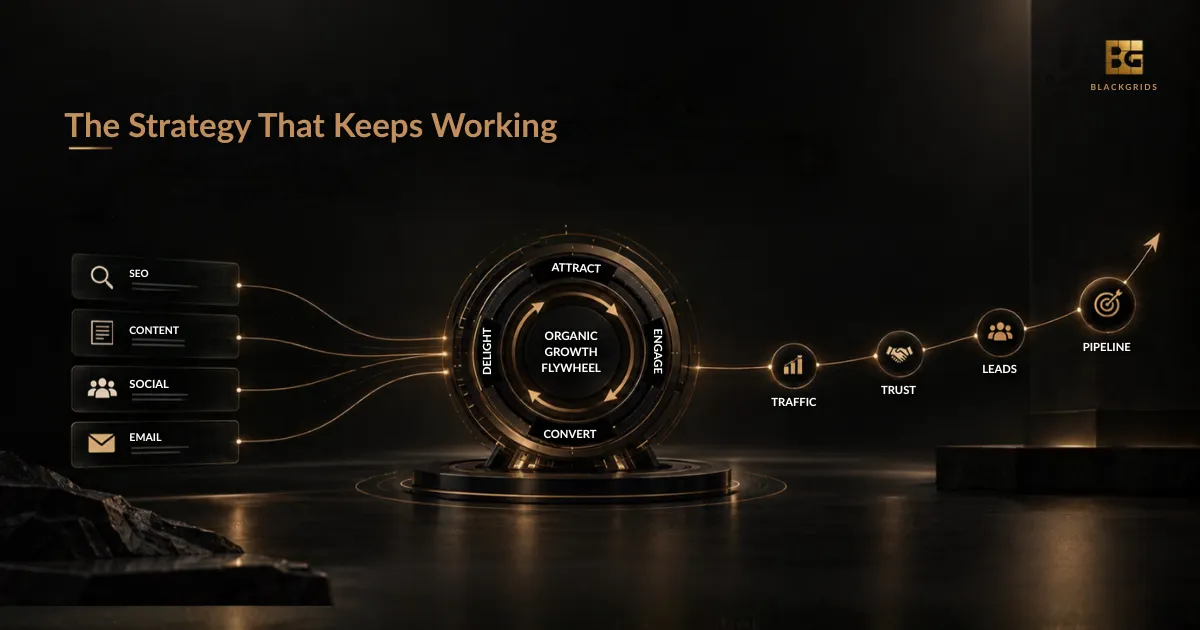
The best organic lead generation strategy combines SEO, social media management, and email marketing working together as one connected system. SEO drives search traffic to your website. Social media builds an audience and drives warm traffic. Email marketing converts that audience into leads and keeps your brand in front of them until they are ready to buy. Each channel compounds on its own. Together they create a lead generation machine that produces results without ongoing ad spend.
Sources
1. Organic marketing ROI and timeline data — HubSpot: Organic Marketing Secrets 2026
2. SEO ROI statistics and benchmarks — SeoProfy: SEO ROI Statistics 2026
3. SEO vs PPC cost per lead comparison — theStacc: SEO ROI Statistics 2026
4. Organic vs paid social media ROI — Searchlab: Organic vs Paid Social 2026
5. Organic vs paid social strategy guide — Brandlix: Organic vs Paid Social Media 2026


